
This page covers Akira Kurosawa DVD releases which come with English subtitles. As such, this page is primarily catering for the English speaking audience. However, in case non-English DVD editions crop up that might be of interest also to the English speaking audience, those releases are mentioned here, as well.
The arrangement of the page is chronological, starting with Kurosawa’s earliest movies and progressing to his last ones. The current availability of Kurosawa’s films on DVD is actually very good, with all films available and in print. This means that there is no longer any reason for anyone to purchase the Chinese Mei Ah prints, which used to be the only options for many of the early Kurosawa films, but come with terrible subtitles that had been translated from Japanese into Chinese and then from Chinese into English. Stay away from those!
You may also be interested in my list of blu-ray Kurosawa releases, or the availability of Kurosawa documentaries, films with Kurosawa’s input or those based on Kurosawa’s works.
Contents:
Sanshiro Sugata (1943)
The Most Beautiful (1944)
Sanshiro Sugata II (1945)
They Who Step on the Tiger’s Tail (1945)
No Regrets for Our Youth (1946)
One Wonderful Sunday (1947)
Drunken Angel (1948)
The Quiet Duel (1949)
Stray Dog (1949)
Scandal (1950)
Rashomon (1950)
The Idiot (1951)
Ikiru (1952)
Seven Samurai (1954)
Record of a Living Being (1955)
Throne of Blood (1957)
The Lower Depths (1957)
The Hidden Fortress (1958)
The Bad Sleep Well (1960)
Yojimbo (1961)
Sanjuro (1962)
High and Low (1963)
Red Beard (1965)
Dodesukaden (1970)
Dersu Uzala (1975)
Kagemusha (1980)
Ran (1985)
Dreams (1990)
Rhapsody in August (1991)
Madadayo (1993)


Sanshiro Sugata (Sugata Sanshiro, 1943)
There are three quite good Sanshiro Sugata releases out there: Criterion, BFI and Madman. These are for DVD regions 1 (North America), 2 (Europe, Japan) and 4 (Australia, New Zealand, etc.), respectively. It must be noted that none of these DVDs contain the film as it was originally released in theatres, as the studio removed scenes after the film’s release. It is generally believed that the original cut of the film no longer exists in any form.
If I had to choose between the three, I would either go for the British region 2 BFI release or the Australian Madman print. While the picture quality is similar across the three releases (although the Criterion release is slightly sharper), the BFI and Madman prints come with eight minutes of deleted scenes, which the Criterion release does not have.
While the Madman release is a stand-alone one, both BFI and Criterion offer Sanshiro Sugata as part of larger box sets. The BFI disc is part of their excellent Early Kurosawa box set, while the Criterion edition is available as part of The First Films of Akira Kurosawa box set ($50 or thereabouts, released August 2010), and the massive AK 100: 25 Films of Akira Kurosawa box set ($350 or thereabouts).
The BFI Early Kurosawa box set is available from Amazon.co.uk. You can find my review of the set here.
Criterion’s First Films of Akira Kurosawa box set can be ordered from Amazon.com and Amazon.ca.
The AK 100 box set, which has the same print as the one above, is similarly available from Amazon.com and Amazon.ca. For more information about the set, see here.
Finally, the Australian Madman DVD is sold directly through Madman’s website. Shipping costs are not terrible, even to destinations outside of Australia. Note that the prices are in Australian dollars.

The Most Beautiful (Ichiban utsukushiku, 1944)
Both BFI and Criterion have put out good releases of The Most Beautiful, and both come as part of box sets. However, in addition to being blurrier, the BFI print also has noticeably less contrast and is darker in many places than Criterion’s, and the Criterion print is consequently preferrable here. Neither comes with any extras.
Criterion’s First Films of Akira Kurosawa (DVD region 1) box set can be ordered from Amazon.com and Amazon.ca.
Criterion’s print is also available as part of the AK 100 box set (DVD region 1), which is similarly available from Amazon.com and Amazon.ca. For more information about the set, see here.
The BFI Early Kurosawa box set (DVD region 2) is available from Amazon.co.uk. You can find my review of the set here.
Sanshiro Sugata Part Two (Zoku Sugata Sanshiro, 1945)
Like the first Sanshiro Sugata film, also its sequel is available in three relatively good editions. These are again by BFI (UK), Criterion (US) and Madman (Australia). The picture quality with all three is worse than their respective Sanshiro Sugata releases, but still perfectly watchable. None have any extras. The BFI and Criterion editions come as part of box sets, while the Madman release can be purchased separately.
BFI’s Sanshiro Sugata Part Two (region 2) comes as part of the Early Kurosawa box set, which is available from Amazon.co.uk. You can find my review of the set here.
Criterion’s edition can be bought as part of the First Films of Akira Kurosawa box set, which can be ordered from Amazon.com and Amazon.ca.
Criterion’s print is also available in the AK 100 box set, which is similarly available from Amazon.com and Amazon.ca. For more information about the set, see here.
Finally, the Australian Madman DVD is sold directly through Madman’s website. Shipping costs are not terrible, even to destinations outside of Australia. Note that the prices are in Australian dollars.
They Who Step on the Tiger’s Tail (Tora no o wo fumu otokotachi, 1945)
Just like the other early Kurosawa titles, also They Who Stepon the Tiger’s Tail is available from both BFI (UK) and Criterion (US) as part of their larger early Kurosawa box sets. They are equally good releases. If I absolutely had to choose which one is better, I would choose the Criterion due to its sharper and slightly brighter image. Having said that, the choice is not totally obvious, especially since the Eclipse is so sharp as to be quite grainy at times. Neither comes with any extras.
Criterion’s print is available as part of the First Films of Akira Kurosawa (DVD region 1) box setm which can be ordered from Amazon.com and Amazon.ca.
Criterion’s print is also available as part of the AK 100 box set (DVD region 1), which is similarly available from Amazon.com and Amazon.ca. For more information about the set, see here.
The BFI Early Kurosawa box set (DVD region 2) contains BFI’s version and is available from Amazon.co.uk. You can find my review of the set here.

No Regrets for Our Youth (Waga seishun ni kuinashi, 1946)
Again, as with most of the other early Kurosawa films, the choice really is between a Criterion (US) and BFI (UK) edition. The BFI is slightly blurrier than the Criterion, but in the end there is quite little difference between the two. No extras are available from either.
Criterion’s print is available as part of the Postwar Kurosawa (DVD region 1) box set, which can be ordered from Amazon.com and Amazon.ca.
Criterion’s print is also available as part of the AK 100 box set (DVD region 1), which is similarly available from Amazon.com and Amazon.ca. For more information about the set, see here.
The Early Kurosawa box set (DVD region 2) contains BFI’s version and is available from Amazon.co.uk. You can find my review of the set here.
One Wonderful Sunday (Subarashiki nichiyobi, 1947)
Yet again, just like with most of the other early Kurosawa films, the choice is between a Criterion (US) and BFI (UK) edition. The BFI is slightly blurrier than the Criterion, but in the end there is quite little difference between the two. No extras are available on either release.
Criterion’s print is available as part of the Postwar Kurosawa (DVD region 1) box set, which can be ordered from Amazon.com and Amazon.ca.
Criterion’s print is also available as part of the AK 100 box set (DVD region 1), which is similarly available from Amazon.com and Amazon.ca. For more information about the set, see here.
The Early Kurosawa box set (DVD region 2) contains BFI’s version and is available from Amazon.co.uk. You can find my review of the set here.

Drunken Angel (Yoidore tenshi, 1948)
The best release of Drunken Angel currently available is the 2007 Criterion edition, which is digitally restored and comes with a half an hour documentary and a commentary by Donald Richie. The picture and sound quality is very good, and I doubt any release will surpass this one any time soon. This Region 1 (North America) release can be bought from Amazon.com.
Meanwhile, the best Region 2 release of Drunken Angel in English appears to be the one by the British Film Institute, which they put out in 2005. I have not had the privilege of actually seeing this release, but BFI releases in general are relatively good, although not necessarily quite as marvellous as one might hope. The DVD comes with a 12-page booklet with notes by film historian Philip Kemp, and includes two other short articles as well. This BFI DVD is available at Amazon.co.uk. It is region 2 only, so you will need to have a multi-region DVD player in case you wish to watch the DVD outside of Europe and Japan.
Those who need a Region 4 release, take a look at the Madman release, which ought to be more or less on the same level as the BFI disc, although I have no actual confirmation of this at the time of writing.

The Quiet Duel (Shizukanaru ketto, 1949)
Released in 2006, this BCI/Ronin Entertainment DVD comes with a trailer, interviews, a short documentary, as well as liner notes by Stuart Galbraith IV. The release is not remastered, but is of fairly good quality both in terms of audio and video.
This DVD is available at Amazon.com and Amazon.ca, as well as at Amazon.co.uk as an import. It is a region 1 DVD, so those outside of North America need a multi-region DVD player to play it.
For Region 2, there is the Yume Pictures release, which is the same transfer as the R1 Ronin Entertainment release mentioned above, but lacks the extras. Note that instead of the more standard translation of the title, the DVD is called The Silent Duel. It is available from Amazon.co.uk.
For those in need of a Region 4 release, there is the Australian Madman release, but it is said to be visibly inferior to the Ronin transfer.

Stray Dog (Nora inu, 1949)
Criterion’s quality Stray Dog release comes with an audio commentary by Stephen Prince, as well as half an hour long documentary on the making of the film, plus a booklet quoting from Kurosawa’s autobiography. The quality of the restored video and audio is good, as always, although not quite comparable to Criterion’s best efforts.
Stray Dog is available at Amazon.com, Amazon.ca, as well as at Amazon.co.uk as an import. It is a region 1 DVD, so those outside of North America need a multi-region DVD player to display it.
Those preferring a region 2 release may consider the considerably less interesting (at least in terms of extras) BFI release, available at Amazon.co.uk.
For Region 4, there is the Madman release.

Scandal (Shubun, 1950)
Scandal was released in Region 2 as part of the British Eureka/Masters of Cinema series. The restored video is said of generally acceptable quality, while the audio is not excellent, but serves its purpose. The DVD comes with a seven-minute long introduction by Alex Cox, as well as a booklet and a gallery of images.
Scandal is available at Amazon.co.uk. It is a region 2 DVD, so those outside of Europe and Japan need a multi-region DVD player.
An alternative for those in Region 1 (North America) is the Postwar Kurosawa box set from Criterion’s Eclipse series. In addition to Scandal, the very reasonably priced set also comes with Record of a Living Being, No Regrets for Our Youth, One Wonderful Sunday and The Idiot. The quality of the release is fine, but note that the Eclipse series releases are not digitally restored in the way that normal Criterion releases are, and neither do they have any real extras on the discs. On the other hand, the price of the five films is almost that of a single movie. The box set can purchased from Amazon.com.
Those wanting a Region 4 release may again look towards Madman’s Eastern Eye series.

Rashomon (Rashomon, 1950)
I am happy to report that Rashomon has a number of fairly good releases out there. Criterion has done an excellent job with their region 1 take, but the UK based Optimum and the Australian Madman releases are also very good. All come with a good quality transfer, although the 2012 Criterion edition is the winner.
Criterion’s Rashomon comes with numerous extras, including Donald Richie’s audio commentary, an introduction by Robert Altman, the 68 minute documentary A Testimony as an Image, an audio interview with Takashi Shimura, and excerpts from a Japanese documentary on Kazuo Miyagawa, the cinematographer for Rashomon. The region 1 release is available from Amazon.com and Amazon.ca. As it is a region 1 DVD, those outside of North America need a multi-region DVD player to watch it. Criterion also has an even superior Blu-ray edition of the new restoration. Do note that Criterion furthermore has an older DVD edition, but the new 2012 edition should be preferred over that one, as the transfer is better and there are more extras.
Those preferring a region 2 (Europe) release can get the Optimum edition, available at Amazon.co.uk. It does not have a commentary track like Criterion’s version, but includes many of the other extras, as well as introduction by John Boorman. There is also an older BFI release for region 2, but it is of lesser quality, so forget that.
For Region 4 (Australia, New Zealand, etc.), check out the Madman release, which includes the same documentary as the Optimum and Criterion release (although under a different name), as well as the short documentary on Kazuo Miyagawa, which the Criterion edition has. Madman also includes short outtakes (some half a second each) and newsreel footage.

The Idiot (Hakuchi, 1951)
Like Scandal, The Idiot has been released in Region 2 as part of the British Eureka/Masters of Cinema series. The restored video transfer is decent. The DVD comes with a nine-minute long introduction by Alex Cox, as well as a booklet and a gallery of images.
The Eureka/Masters of Cinema Region 2 The Idiot is available at Amazon.co.uk. As it is a region 2 DVD, those outside of Europe and Japan need a multi-region DVD player to play it.
Criterion, meanwhile, offers The Idiot as part of the Region 1 Eclipse series box set Postwar Kurosawa. The quality is fine, but note that the Eclipse series releases do not undergo the same restoration treatment as normal Criterion movies, and neither are there any real extras on the discs. The price, however, is certainly right. The other films in the box set are Record of a Living Being, No Regrets for Our Youth, One Wonderful Sunday and Scandal, and the box set can purchased from Amazon.com.
For a Region 4 release, there is the Madman (Eastern Eye) release, which is also available at Amazon.com. Note, however, that Madman’s transfer is not quite as sharp as with the Masters of Cinema release, and one should therefore prefer the British release over the Australian one.

Ikiru (Ikiru, 1952)
Another quality release from the Criterion Collection. Their two-disc Ikiru comes with digitally remastered video and almost hiss and crack-free audio. The extras include a commentary from Stephen Prince, the 90-minute long A Message from Akira Kurosawa interview documentary with Kurosawa, and the 41-minute long documentary on Ikiru from the Akira Kurosawa: To Create is Beautiful series.
Criterion’s Ikiru is available at Amazon.com, Amazon.ca, as well as at Amazon.co.uk as an import. It is a region 1 DVD, so those outside of North America need a multi-region DVD player to display it.
Those preferring a region 2 release may consider the much less interesting and lower quality BFI release, available at Amazon.co.uk.
For Region 4, try out the Madman release.

Seven Samurai (Shichinin no samurai, 1954)
It took them two tries to get it right, but it has been worth the wait. Criterion Collection’s three-disc Seven Samurai is not only the best version of the film, it is the best Akira Kurosawa release currently out there on DVD. The picture quality is marvellous, the audio not any worse, and the discs are packed with extras, including two audio commentaries and more than four hours of documentaries and interviews.
Criterion’s Seven Samurai is available at Amazon.com and Amazon.ca, as well as at Amazon.co.uk as an import. It is a region 1 DVD, so those outside of North America need a multi-region DVD player to view it.
Note that the DVD that you want to buy is the 3-disc one with the black cover, not the original (2-disc) release with the white cover.
For those who want to keep with region 2, BFI has a release but it is nothing to get too excited about. For Region 4, there is the Madman release, but again the Criterion really is the one you should get.

Record of a Living Being (Ikimono no kiroku, 1955)
The movie is also known in the English speaking world as I Live In Fear, which is what both the British Film Institute and Criterion have decided to use. Both are decent but relatively low-cost releases with very few or no extras (BFI has two essays included).
Two factors probably decide which one you want to go with. One is the region encoding: the Criterion release is Region 1, while the BFI release is Region 2. More significantly, however, the BFI release is a separately sold single disc, while the Criterion release is part of the Postwar Kurosawa box set that was release through the company’s Eclipse series and includes four other movies (The Idiot, No Regrets for Our Youth, One Wonderful Sunday and Scandal).
The British Film Institute DVD is available at Amazon.co.uk. It is region 2 only, so you will need to have a multi-region DVD player in case you wish to watch the DVD outside of Europe and Japan.
Criterion’s Eclipse series Postwar Kurosawa box set can meanwhile be purchased from Amazon.com.
There is also the Region 4 Madman release, which I know next to nothing about. Amazon.com carries the title through their Market Place sellers.

Throne of Blood (Kumonosu jo, 1957)
Once again it is the Criterion release of Throne of Blood that surpasses all the rest. However, do note that Criterion has released the film twice, first as a DVD-only release in 2003, and then as a DVD+Blu-ray dual format release in 2014. The latter is in all ways superior to the former, so be careful if buying second hand and make sure to get the newer release.
The 2014 release features excellent video and audio quality and comes with a fairly standard (read “excellent”) set of features for a Criterion release. These include an audio commentary by Michael Jeck, a making of episode from Akira Kurosawa: It Is Wonderful to Create, an essay by Stephen Prince, and two subtitle translations, one of them a work by Donald Richie based on Jacobean diction.
Criterion’s Throne of Blood is available from Amazon.com and Amazon.ca, as well as from Amazon.co.uk as an import. It includes a region 1 DVD and a region A Blu-ray, so those outside of North America need a multi-region DVD player to watch it.
If you prefer a region 2 release you should consider the considerably less interesting (at least in terms of extras) BFI release, available at Amazon.co.uk.
For Region 4, there is the standard and not all that exciting Madman release.

The Lower Depths (Donzoko, 1957)
Once again, Criterion. The release is really good, with very little to complain in terms of audio or video. Extras are also quite decent, including an audio commentary by Donald Richie, a 33-minute documentary from the It is Wonderful to Create series, plus an essay and cast biographies.
Another “extra” is that The Lower Depths is not served alone. Instead, it is packaged together with Jean Renoir’s 1936 film The Lower Depths, which like Kurosawa’s movie is an adaptation of Gorky’s original play. You therefore get two quality films with the price of just one Criterion release!
The Lower Depths is available at Amazon.com and Amazon.ca, as well as at Amazon.co.uk as an import. Like Criterion releases in general, it is a region 1 DVD, so those outside of North America need a multi-region DVD player to watch it.
For region 4 there is the Madman release, which should be ok (I have not verified this yet, however).The DVD comes with an image gallery, as well as a commentary by the Monash University film historian and critic Freda Freiberg. Madman’s The Lower Depths is available directly from Madman’s website.
No region 2 releases of The Lower Depths currently exist with English subtitles.

The Hidden Fortress (Kakushi-toride no san-akunin, 1958)
Please note: Criterion will release a new dual format DVD+Blu-ray release of The Hidden Fortress in March 2014. It is expected that this will be superior to anything mentioned below and can be pre-ordered from Amazon.com.
The competition for the title of “the best The Hidden Fortress DVD release in the English speaking world” is a tie between the Criterion release and the BFI one. The only reason why the BFI DVD is pictured here is because I personally greatly dislike Criterion’s cover. Apart from that, the two releases are at least to the best of my knowledge identical. The video quality is very good, and the audio quality is fine as well. The extras are not much, but you can watch an 8-minute interview with George Lucas about the film.
The Hidden Fortress is available at Amazon.com (the Criterion release), Amazon.ca (the Criterion release), as well as at Amazon.co.uk (the BFI release).
If you for some reason insist on the Criterion release but live in Europe, it is generally available also at Amazon.co.uk. The BFI release, meanwhile, can also be purchased at Amazon.com. Remember that these are region one and region two, respectively, so your player will need to be able to handle those regions if you choose to purchase them.
The Region 4 Madman release is greatly inferior due to its poor NTSC-to-PAL transfer.

The Bad Sleep Well (Warui yatsu hodo yoku nemuru, 1960)
Once again it is the Criterion release that one should pick when looking for The Bad Sleep Well. The DVD comes with the It is Wonderful to Create documentary, interviews, trailer and a booklet containing essays. The transfer in terms of both its audio and video qualities is perfectly fine, although not Criterion’s best effort.
Criterion’s The Bad Sleep Well DVD is available at Amazon.com and Amazon.ca, as well as at Amazon.co.uk as an import. Those buying the DVD outside of the US must keep in mind that a multi-regional player is needed to play the Region 1 disc.
Those in Europe and with no multi-region DVD player or no desire to purchase a Region 1 DVD may turn to the BFI release of The Bad Sleep Well. While it comes with no extras save for a small booklet, its sound and picture quality is not noticeably worse than that the Criterion disc’s. Be aware, however, that the image in the BFI release is slightly cropped. Amazon.co.uk stocks it, as usual.
For Region 4, there is again a Madman release. The DVD comes with a commentary by Ross Gibson, who works as a Professor of Media Arts in the University of Technology, Sydney. The DVD is available from Madman’s website.

Yojimbo (Yojimbo, 1961)
Criterion, Criterion, Criterion. Do note that there are two Criterion releases of this film on DVD (and one on Blu-ray), and you should get the one released in January 2007 that comes with a cream-coloured cover (as opposed to the blue-cover first release). With its newly restored digital transfer and good audio options it really beats the competition. The Region 1 release also includes an episode of the now-standard It is Wonderful to Create documentary, a Stephen Prince commentary, a trailer and a teaser, as well as a booklet with an essay and further notes about the film.
For region 2 there is the BFI print, which is nowhere near the Criterion quality, but comes with what many have considered to be a rather good commentary by Philip Kemp. The Australian (Region 4) release by Eastern Eye, meanwhile, has sharp picture and good audio.
Criterion’s Yojimbo is available at Amazon.com and Amazon.ca, as well as at Amazon.co.uk as an import.
Note that Yojimbo is also available in a single box together with its sequel Sanjuro, which Criterion re-released simultaneously in 2007 with similar high quality updates. This double pack is again available at Amazon.com, Amazon.ca, as well as at Amazon.co.uk as an import.
Amazon.co.uk also has the inferior BFI release.
The Madman (Eastern Eye) release is meanwhile available for those who need a Region 4 release.

Sanjuro (Tsubaki Sanjuro, 1962)
The edition to choose here should be the 2007 one by Criterion (with cream-coloured cover, not the older yellow one). The problem here, however, is that while Criterion’s new release is the sharpest and comes with the best extras, it is slightly cropped from the sides. The re-issue is better in this respect than what was the original Criterion release, but even now when comparing the Criterion to the BFI release, one can easily see that it misses some of the width. To see it for yourself, take a look at DVD Beaver’s Sanjuro screenshot comparison.
If one can live with the missing horizontal inches, the Criterion is an excellent release. Almost identical to the treatment received by Yojimbo, Sanjuro comes with a newly restored digital transfer, and good audio options. The DVD also includes an episode of the It is Wonderful to Create documentary, a Stephen Prince commentary, a trailer and a teaser, as well as a booklet with an essay and further notes about the film.
Criterion’s Sanjuro is available at Amazon.com, Amazon.ca and Amazon.co.uk as an import.
Note that it is also available in one box together with Yojimbo, which Criterion also decided to re-release. This double pack, as usual, is available at Amazon.com Amazon.ca and Amazon.co.uk as an import.
Amazon.co.uk also stocks the Region 2 BFI release, which as said has more of the frame in it, but is in other respects inferior to the Criterion.
The Region 4 Madman release is said to have issues with its transfer, and is not recommended, unless you insist on Region 4.

High and Low (Tengoku to jigoku, 1963)
Yet again, it is a Criterion that you should go with when looking for the best English friendly High and Low edition. More specifically, it is their second release of the film, a double disc with grey cover (pictured here) that you should pick up, not the first release with its brown cover.
The new Criterion, released in July 2008, has a digitally restored transfer, and a good amount of extras, including an enjoyable commentary by Stephen Prince, some interviews, as well as the standard “It’s Wonderful to Create” documentary episode.
Note that there has been confusion about the film’s correct aspect ratio, with BFI’s release marketed as 2.55:1 and Criterion’s 2.35:1. Whatever the exact ratios of these releases, the fact is that the BFI (and Madman) releases have slightly more width to them, while the Criterion shows more on the bottom of the screen. The differences are not huge, although I personally prefer the Criterion. You can see comparisons over at DVD Beaver.
Criterion’s High and Low is available from Amazon.com and Amazon.ca, as well as from Amazon.co.uk as an import.
For those looking for a Region 2 release, BFI’s High and Low is available at Amazon.co.uk.
For Region 4, there is the Madman release, which I know practically nothing about.

Red Beard (Akahige, 1965)
Yet again it is the Criterion release of Red Beard that one should look for if hunting for the best release available in the English language. The image and sound are restored to the high standard that we have come to expect from Criterion (although the restoration work is not quite as stellar as with the likes of Seven Samurai), and the DVD also comes with Stephen Prince’s commentary, as well as the standard booklet with film notes by Donald Richie.
Criterion’s Red Beard is available at Amazon.com and Amazon.ca, as well as at Amazon.co.uk as an import. Those buying the DVD outside of the US must keep in mind that a multi-regional player is needed to play the Region 1 disc.
If you are in Europe and have no multi-region DVD player or no desire to purchase a Region 1 DVD, you may turn to the BFI release of Red Beard. Note, however, that it comes with no extras save for a short and quite inaccurate introduction by Alex Cox, and the image quality is also slightly poorer. Amazon.co.uk stocks it, as usual.
As usual, also Madman’s Eastern Eye series includes Red Beard, but I know very little of this release.

Dodesukaden (Dodesukaden, 1970)
Criterion finally stepped forward in 2009 and released Dodesukaden on DVD, making it the first proper English language edition of the film. Since it is the only version currently available with English subtitles, it is obviously the version to go with.
That is not to say that it isn’t a good release, which it is — standard Criterion high quality, in fact. If you don’t believe me, just look at the review roundup. The only real piece of criticism is that the release comes with no commentary, which is rare for Criterion’s Kurosawa releases.
Criterion’s Dodesukaden is available at Amazon.com and Amazon.ca, as well as at Amazon.co.uk as an import. Those buying the DVD outside of North America must keep in mind that a multi-regional player is needed to play the Region 1 disc.
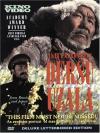
Dersu Uzala (Dersu Uzala, 1975)
It is unfortunately a rather tough call regarding Dersu Uzala, as none of the releases are really all that excellent. The French R2 release comes with English subtitles, and might be better than the competition, but it is difficult to say as it is more or less unavailable.
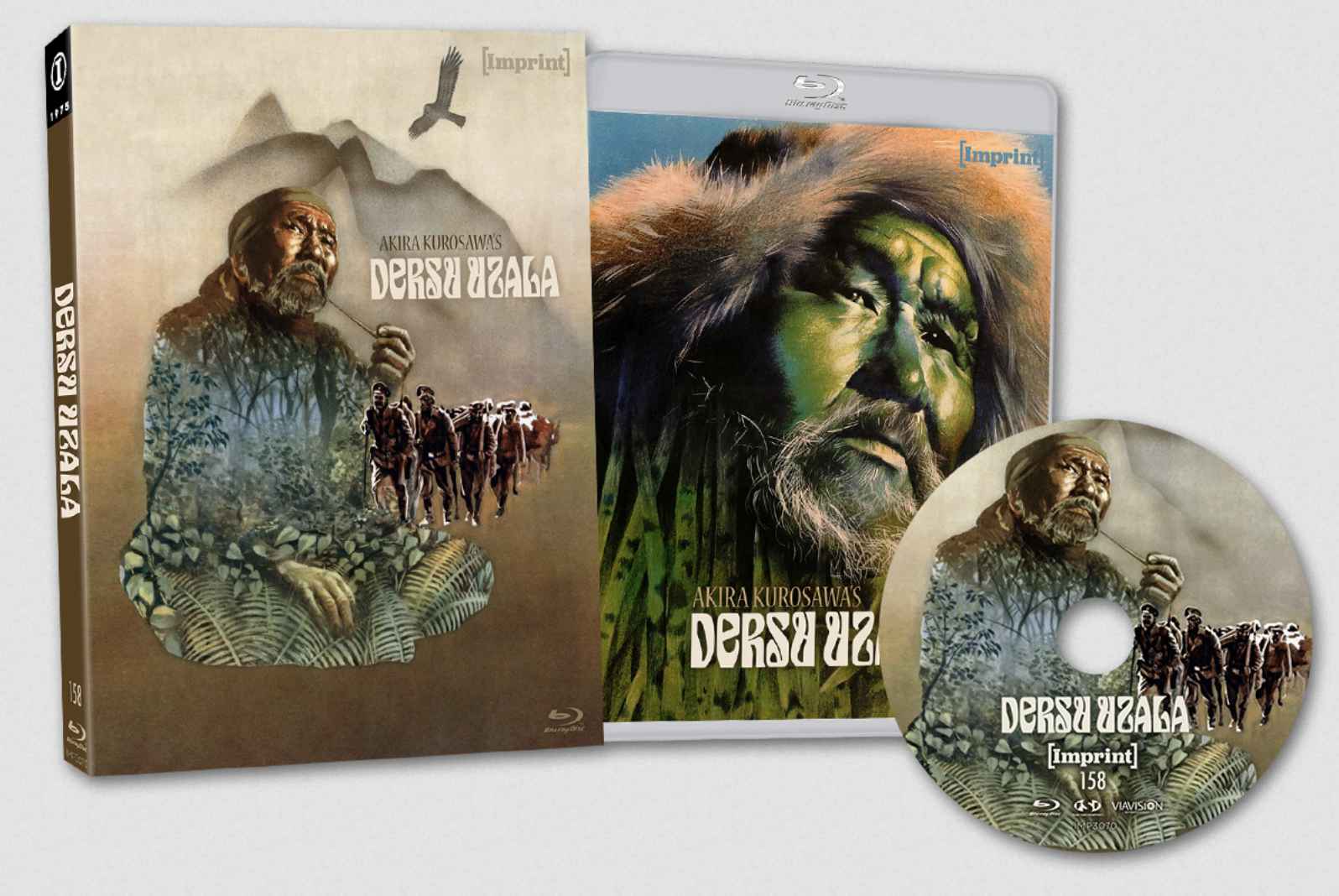
The American Kino release pictured here is probably the way to go. Which doesn’t say much, I know. But its picture quality is somewhat better than what is found in the competing Region 2 Artificial Eye release.
For the Region 1 Kino release, see Amazon.com, Amazon.ca or Amazon.co.uk.
For Region 2, there is also the Artificial Eye release, which is available at Amazon.co.uk.
Note, finally, that there is also a Korean R3 release by Spectrum, which comes on either 2 or 3 DVDs and includes both the Russian and the International version of the film (the 3 DVD version has both, while the 2 DVD version has only one). More information can be found at the DVD Beaver website. You can purchase the disc for instance here.

Kagemusha (Kagemusha, 1980)
Kagemusha has a stellar Criterion release for Region 1, whose picture quality far surpasses the other editions. Also, as far as I know it is the only full length DVD release of the movie that comes with English subtitles. The European and Australian releases by Fox are all the 17 minutes shorter “international” version of the film, rather than the original 179 minute Japanese cut. However, which version actually is the definite one, is a good question. I’ve tried to map the differences.
The Criterion release comes among other things with Stephen Prince’s commentary, a 40-minute “making of” documentary, and interviews with Francis Ford Coppola and George Lucas who helped to finance the film. Good stuff.
Criterion’s Kagemusha is available at Amazon.com and Amazon.ca, as well as at Amazon.co.uk as an import.
For Region 2, there are two Fox releases, of which the 2006 Fox Cinema Reserve release is better.

Ran (Ran, 1985)
The question which release of Ran to go with partly depends on your tastes regarding colour palettes. While the Criterion R1 release is the most definitive English-friendly edition of the movie on DVD in terms of its extras, some prefer the R2 Optimum release because of its brighter colours. (There is also a Warner R2 release, which is basically the same as the Optimum release, but without removable subtitles.) To see an actual comparison of the prints, check out for example the DVD Times review of the Optimum release.
While the Optimum release comes with only Chris Maker’s documentary “A.K.” and a theatrical trailer, the Criterion release is packed with goodies, including an introduction by Sidney Lumet, Chris Maker’s “A.K.”, as well as two other documentaries, a Tatsuya Nakadai interview, and a 28-page booklet. Oh yes, and of course a high quality commentary by Stephen Prince, as is customary with Criterion’s Kurosawa releases.
Ultimately, it is up to you which version to pick. Criterion’s Ran (pictured above) is available at Amazon.com and Amazon.ca, as well as at Amazon.co.uk as an import.
The Optimum R2 release is available at Amazon.co.uk.

Dreams (Yume, 1990)
The good news is that the choice here is easy. The bad news is that it is not because of there being a great release of Dreams available, but rather because there is only one you can really go with. This is the Warner Home Video R1 release, which has no extras. The image is so-so, while the sound does its job.
Dreams is available at Amazon.com and Amazon.ca, as well as at Amazon.co.uk as an import.

Rhapsody in August (Hachi-gatsu no kyoshikyoku, 1991)
MGM’s Region 1 release of Rhapsody in August is a decent enough DVD with good image and sound quality, although very little in terms of extras (only a trailer is included). It is currently the definite version of the film when it comes to releases with English subtitles — the UK release by Prism should be avoided at all costs, as it comes with a cropped aspect ratio.
MGM’s Rhapsody in August is available at Amazon.com and Amazon.ca, as well as at Amazon.co.uk as an import. I really quite like the cover of this one.

Madadayo (Madadayo, 1993)
For individual releases, the problem is that they are slightly cropped and with poor image quality. If you can live with that, the Region 1 release by Winstar is serviceable, although far from being doing the film justice. The extras are the trailer and some storyboards. For Region 2, there is the 2007 Yume Pictures release, which is pretty much the same as the Winstar release.
The best English friendly release as a whole is the one found in Criterion’s massive “AK 100: 25 Films of Akira Kurosawa” box set. Unfortunately, the company has not released the film on its own. More information about the AK 100 box set can be found here. It is available from Amazon.com and Amazon.ca.
Winstar’s Region 1 Madadayo is available at Amazon.com and Amazon.ca, as well as at Amazon.co.uk as an import.
The Yume Pictures Region 2 release of Madadayo can meanwhile be purchased from Amazon.co.uk.
For Region 4, there is the equally fine and flawed Madman release, which calls itself Maadadayo and has excellent cover art.