
Drunken Angel: Jungle Boogie and other music
-
10 June 2008
Jon Hooper
10 June 2008
yippee
Hi Jon,
Yes, I love the Jungle Boogie sequence. It isn’t the music, though, it is the transformation of Mifune.
In fact, I am absolutely mesmerized by Mifune’s dance. I keep wanting Kurosawa to cut from the singer to more of Mifune so that I can locate the source of htis terrifying energy. He is like Frankenstein dancing…and is actually scary…both repellent and attractive. I usually stop the dvd and replay the scene several times. It is impossible to locate exactly where the transformation occurs…but that quick shot at the end where Mifune raises his arms…whoah. Intense. Scary. Cool as hell.
10 June 2008
Jon Hooper
Mesmerizing is the right word. I find the scene grotesque and embarrassing, as I said, but I have to admit that I can’t look away when Mifune is doing his gorilla act. I love the way Kurosawa then cuts to Mifune and Shimura battling with one another, as if completing the dance.
11 June 2008
yippee
Good call on the cut to the battle.
Embarrassing, yes…you’re right, there’s that, too. Lots going on in that scene, Mifune shaking his ass (Truly shocking! Grotesque! Embarassing! Watching makes ME feel drunk and sick and I can’t look away) and the nightclub singer putting her hand to her mouth calling…”ooooowaaaa”…collides West/East and High/Low and Then/Now.
And I think, after all, indie hipster cliches have their roots somewhere, right? I mean, this kind of music has an historical knowledge-base cache’ now. But, then, was just one of those cultural translations showing influence but still looking kinda odd and “off”. Like a teenager in Cleveland affecting a British Accent ‘cuz he liked the Beatles in the 60’s. Cringe-worthy. But, real, dude. You know that thing about Kurosawa not looking away? Here’s a great example. Looking squarely at things that make us cringe.
One of my favorite things about gendai-geki Kurosawa is this freezing of the moment of cultural acquisition with all the awkwardness, ugliness and absurdity intact. I value this in Kurosawa very highly. Embarassing-you said it! But, really, really cool and interesting.
MUSIC
Kurosawa had the concept of this intersection of moods and meanings, and an attitude toward the use of music that was counter to “accompaniement”-music played a role in the scene sometimes as strong as an actor-a role that sometimes even contradicted the mood of the scene-as a “mutual multiplier” (Kurosawa’s phrase). You’ve probably read his comments on the topic in his “Something Like an Autobiography” wher he talks extensively about the “Cuckoo Waltz” in regards to this film.
Donald Richie, heaven bless the man, gave us so much writing about Kurosawa, and some of it is beyond wonderful…but, he has his blind spots as we all do, and I think he underestimates Kurosawa’s musicality. Richie only sees the big themes, and I’ve seen an interview where he actually said, “Kurosawa had a tin ear” (Richie thinks that the “Bolero”-like music in Rashomon is crap. But, even if one has the initial “I’ve heard this somewhere before” feeling, it goes away pretty quickly, and you feel the heat, participate in the film in a way you probably might not without the music). Richie doesn’t see the nuanced bits- he doesn’t notice the contrasts thematically throughout a film such as “Drunken Angel”-really, the variety of music in “Drunken Angel” is rich, complex, wide-ranging…isn’t it? Everything from the Jungle Boogie scene to the “Cuckoo Waltz” to that haunting, lovely guitar solo to the finale.
Lotus, right? Emerging from the mud, clean. Art.
(I think it would be interesting to compare Ozu’s use of music with Kurosawa’s.
11 June 2008
Vili
Indeed, a good point about the cut, Jon!
I myself have quite mixed feelings about Jungle Boogie, and have never been able to decide whether I should feel embarrassed about it or enjoy it as an excellent playful wink of an eye from Kurosawa. Apparently, Kurosawa at least cared enough about the song to write the lyrics himself.
The girl singing it is simply brilliant, though, in a very camp sort of a way. Like Yippee, I also really enjoy Mifune’s performance here.
As for the guitar playing, I personally tend to get a very “European” feel from it, rather than American. That opening scene could well be from an Italian or a French film of the time.
I have also wondered about how big a part of Japan guitars were at that point. Sanada thinks that it is a mandolin, which according to Wikipedia is an instrument that has been very popular in Japan since before WW2.
Meanwhile, according to this page, “in 1944 the steel guitar and banjo was outlawed”, so perhaps that is why Sanada thinks that it is a mandolin and not a guitar. Another sign of the times changing.
By the way, according to the same page, popular jazz had apparently been in Japan already since the 1920s, but was pretty much reintroduced after the war, so a connection between Jungle Boogie and the Occupation is indeed possible.
19 June 2008
Jeremy
Great post Jon, I too find it a bit embarrassing, but I think it the point. We are feeling the embarrassment that a non-drunken Matsunaga should be feeling.
I find this scene very good, I quite enjoy the singing and the acting in it.
Being a WWI and WWII history buff, I recall reading about Jazz in Japan long ago. And to my knowledge jazz was introduced via the British around the 1910’s when they asked for Japan’s help in WWI. After WWI and the disappearance of the British, a demand was created and they started to receive jazz from America in the 1920’s via various attempt trade agreements. At this time it really took off in Japan. Toward the 1930’s with Japan militaristic ways increasing, non-Japanese material was all but gone. After WWII and the return of the American awareness, Jazz took off again as a something modern, something new, something Japan had nothing of.
I would say a connection of the boogie with the occupation is made, there are very subtle things that appears Kurosawa made regarding the occupation without showing the occupation. Its role in the film, or its importance if any, I dont really know.
9 May 2011
lawless

I like the nightclub/Jungle Boogie scene, and think the singer is actually quite good. What embarrasses me the most here, though, is the implicit racism. Putting the connotations of “Jungle Boogie” and the gyrations and singing style of the singer together, it clearly (to me, anyway) is intended as a Japanese imitation of African-Americans, the originators of jazz, and bears a more than passing resemblance to blackface. We see the typical stereotypes: musical, rhythmic, wild, frenetic, untamed (she sings that she’s a leopard, if I remember correctly), animal-like, and possibly dangerous. This is underlined by the odd and somewhat racist images of African-Americans and African-American types that exist in manga and anime, making it much less likely to be completely accidental.
Does anyone else have this reaction?
9 May 2011
cocoskyavitch

Yes, lawless, and you’re right. It happens in High and Low where a prominent African American soldier or navy guy is lumbering around and drinking and dancing.
There seems to be a love/hate fascination with what is seen as the wild energy of the African American. I think they are seen as hypnotically interesting and virile yet animalistic. So, yes, that’s a problem.
In the Oxford Anthology of Japanese Short Stories there is “Prize Stock” by Kenzaburo Oe. I have also just finished reading “Changeling” by the same author. “Prize Stock” revolves aound an African-American soldier shot down into a small rural Japanese village in WWII. In the story the African-American soldier is treated like an animal, like “prize stock” and admired but seen as a beast. (This is a terrifying story, and I recommend it highly). I dare say that some remnant of this attitude remains. Many Asian countries have a prejuduice against not only Africans and African-Americans, but prefer lighter-skins in their own countrymen. There are so many skin-lightening treatments in Thailand, it’s almost a national obsession. and, I am currently working with some Korean programs that have a marked preference for white over African-American applicants. Of course they cannot continue a relationship with us if they discriminate…but the underlying attitudes are still there!
But, then, when “Drunken Angel” was filmed, the US was generally pretty racist, too.
Even Morrisey wrote (sometime in the last 20 years or so)…
America your head’s too big, Because America, Your belly is too big. And I love you, I just wish you’d stay where you belong
In America, The land of the free, they said, And of opportunity, In a just and a truthful way.
But where the president, is never black, female or gay…
Well, one down off the list.
9 May 2011
Vili
Yes, “Jungle Boogie” bothers me as well. Partly for the possible racism, but primarily for a completely different reason: ever since realising that the song was called “Jungle Boogie”, this is pretty much what I have actually been hearing when watching the scene. Turn off the sound for the left-hand video to get the full effect.
Why oh why does the human brain make these links?

9 May 2011
lawless
Coco – Asian societies, being highly homogeneous and with a long history of a sense of ethnic and/or racial superiority (at least in China and Japan), are rife with their own form of racism. I’m not aware of, but not surprised, by the distinction between light and dark-skinned Asians; I’m more aware of distinctions between clear-skinned (i.e., white-powdered, even complexions) and freckled skin, as in the difference between the average Japanese and the average Korean. There’s a tendency to buy into the old Anglo view of Africans as inferior, as they’re the “other” at a second remove, and given their Confucian ideals, East Asians seek to associate with people of high, rather than low, status.
I suspect that racial stereotyping has something to do with the negative reaction to continued presence of US troops in Japan and Korea, especially in the absence of a draft, which contributes to the disproportionate number of minorities in the service because it’s an easier path to advancement than society in general. Would Madam Butterfly’s relatives have urged a liaison with her lieutenant if he weren’t white? I don’t think so.
10 May 2011
cocoskyavitch
Why oh why does the human brain make these links?
Vili I always think of Kool and the Gang’s version of Jungle Boogie as used in Pulp Fiction. Here
Having seen your mashup/comparison, Vili I’m gonna say I actually like the singer’s performance, find it reminiscent of the music in the U.S. at the time, and find it in no way meant to be offensive…but, rather, “hipster” just as the zoot suits are hipster. The call and response part of the song is just classic from the era.
I think lawless you are right-it is racially loaded-but looking closely, I think it is the fascination of the other rather than the repellent that Kurosawa is showing us. The only gorilla (using Vili’s earlier reference to his hulking mass) is Mifune. I always wonder at the seconds of his wagging butt we are privileged to…! It’s an odd choice, a funny one, too, but I also really really love this scene.
I think this is a case of Kurosawa wanting us to feel Mifune’s character drowning in a sump of sensuality and a moral slough that is killing him-he is becoming an animal and losing his way. I don’t know that I would draw conclusions about whether or not the director disapproves of jazz or big bands or African-Americans or their influences on Japan from this scene. Unless, of course, and this is possible-I just perversely like what is bad.
I think the scene is just too stimulating….and Mifune is ill enough to need to stop indulging in alcohol and dancing and women.
Omigosh, if you turnoff all the sound, right after Mifune shakes his butt, the singer throws her arms into the air in a celebratory gesture a couple of times. Now, what do you make of that?!?!?!
10 May 2011
Ugetsu

I don’t really see there as being implicit racism in the scene, to me it is very much a Japanese interpretation of Jazz, I doubt very much if it was specifically associated with African Americans as a style, I would have thought it was seen as ‘American’, not ‘African-American’. I would have thought that most Japanese wouldn’t have been too knowledgeable about the exact origins of jazz or its deeper cultural meaning within America. I agree with Coco that the scene was intended to show the moral slough Mifune is sinking into, the association intended I would imagine is with youthful, western amorality, not with anything specifically tied to African-ness.
Coco:
Many Asian countries have a prejuduice against not only Africans and African-Americans, but prefer lighter-skins in their own countrymen.
Not necessarily lighter skins – it can be the opposite too. In Loung Ung’s harrowing memoir of Cambodia, she writes about how her ethnic Chinese mother desperately tried to get as sun-browned as possible, as the Khymer Rouge specifically targeted the lighter-skinned, as they were considered to be descended from Vietnamese or Chinese origins. Of course, this was in part a reaction to the racism of more ethnically mixed city dwellers against the darker skinned rural Cambodians.
12 May 2011
cocoskyavitch
Ugetsu have you read that book First they Killed my Father? We used that in Cambodia last summer. Going to the killing fields was absolutely harrowing and that book was fresh in our minds. We met Mr. Chum Mey, one of the only survivors of Tuol Sleng Prison at the site. He works there still, today as a custodian of the memory of that horror. He reminds people (in sign language for us-) of the torture he witnessed and endured.
But, your example does not hold. Cambodia today again prefers light-skinned, as it did before the reactionary revolutionary values imposed by the Khmer Rouge. Lighter skins in Thailand, Cambodia, Vietnam, China, Japan (lawless‘s mention of freckles duly noted-but we must nod to geisha makeup’s aesthetic…) and Korea are preferred. Seriously, just go into any store and you will see shelves of skin-lightening creams, and sunbrellas.
Finally, Jazz is seen (and is!) African-American…! At least, that’s where it all began! They often say it’s our one true, authentic American art form!
Didja see the documentary of PBS about the kamikaze pilots interviewed on their attitudes toward Americans? They said that they thought a country so diverse wouldn’t pull together if attacked…hence Pearl Harbor.
Hey, why does Mifune grimace and look like a monster at the end of the dance scene?
13 May 2011
Ugetsu
Hi Coco, yes I read Ungs book quite a few years ago when I was cycling through Cambodia – a harrowing read, but a very good one. Tuol Sleng is a terrible place, I found it very hard to get it out of my mind. I found something particularly disturbing that the Cambodians are reduced to using their own tragic history as a selling point for tourists.
But, your example does not hold. Cambodia today again prefers light-skinned, as it did before the reactionary revolutionary values imposed by the Khmer Rouge. Lighter skins in Thailand, Cambodia, Vietnam, China, Japan (lawless’s mention of freckles duly noted-but we must nod to geisha makeup’s aesthetic…) and Korea are preferred. Seriously, just go into any store and you will see shelves of skin-lightening creams, and sunbrellas.
I’m still not convinced that this has a meaning any deeper than the fondness of Irish girls for tanning creams that make them go orange in the wrong light. There are all sorts of ‘levels’ of racism and abuse in Asia (as elsewhere of course) that are apparent only to locals. For example, the Indonesian female tourist I met in western Cambodia who was regularly shouted at by local women for reasons that completely baffled her (and me), or a British Hong Kong friend I knew years ago who had been adopted from Vietnam by her mixed race parents, but who was regularly verbally abused in parts of China for her ‘Vietnamese’ appearance. But certainly in Thailand and elsewhere in SE Asia there is an association of darker skin with the lower (and rural) classes.
13 May 2011
Ugetsu
Coco
Didja see the documentary of PBS about the kamikaze pilots interviewed on their attitudes toward Americans? They said that they thought a country so diverse wouldn’t pull together if attacked…hence Pearl Harbor.
I hadn’t seen that – its interesting, although I suspect that this was a rationalisation that built up during the war – the pre-war Japanese strategy was based (so far as I know) on a misguided belief that the Americans would counterattack too quickly, thinking that a democracy wouldn’t have the stomach for a protracted war (which the High Command knew they would lose), so that the American fleet could be rapidly lured into a trap.
Hey, why does Mifune grimace and look like a monster at the end of the dance scene?
I assumed during my second look at the film (my first reaction was that I didn’t like the scene and was glad it finished, I liked it much more on repeat viewing) was that he was losing himself in a sort of trance – implying that Jazz was inherently anti-intellect, a primitive music of the flesh?
13 May 2011
cocoskyavitch
Ugetsu, you said
…he was losing himself in a sort of trance – implying that Jazz was inherently anti-intellect, a primitive music of the flesh?
Yep, I’m thinking that’s it. My gosh, though, it is just incredibly alarming! Also, didja note Mifune’s one hand switcheroo backstep? Pretty darn slick!
14 February 2012
One of the most important facts that Donald Richie misses is the fact that the singer of “Jungle Boogie,” in the movie, Shizuko Kasagi-was THE Megastar of Occupation Era Japan. The hit song that she recorded the year before this movie(1947), “Tokyo Boogie Woogie,” was the representative song of the entire Occupation Era which was when this movie was made. Although personally I am not so impressed after talking with Japanese friends I understand more of its importance. Her singing style and body language were revolutionary for that time. The song symbolized the end of the war and hope for the future as a Japanese friend explained it. It was, of course, an example of the influence of American culture on Japan as well. It has been covered countless times since then and will be again in the future.
I was very disappointed when Donald Richie didn’t mention anything about her and her significance. I think many Americans have no knowledge of her at all. How important was the English invasion to American music in the 60’s? (Yup, that important!) A search on Youtube for Tokyo Boogie Woogie in Japanese will give you 411 hits.
14 February 2012
cocoskyavitch
Nice info, Benshi Doug! Thanks for that valuable insight!
lawless, you and I get bonus points. And here is the Tokyo Boogie Woogie: <iframe width=”420″ height=”315″ src=”http://www.youtube.com/embed/BPYxsKzKHYY” frameborder=”0″ allowfullscreen></iframe> 😉
16 February 2012
Vili
Very interesting indeed! I had no idea that she was such a big star.
(And sorry Coco, the forum software doesn’t allow iframes. For those too lazy to copy-paste, here is the link.)
17 February 2012
I’m sure Kurosawa used Shizuko Kasagi to boost ticket sales in Japan for Drunken Angel.
By the way, FC Tokyo ( a soccer team in Tokyo) fans use Tokyo Boogie Woogie as a chant to support their team. You should be able to find some examples on Youtube.
23 February 2012
Amnesty11
Thanks Benshi! Very cool. 😎
22 October 2021
@Benshi Doug “I’m sure Kurosawa used Shizuko Kasagi to boost ticket sales in Japan for Drunken Angel.”
Shirley Yamaguchi was used for much the same reason in Scandal in 1950. Akria Terao (from Dreams, Ran, and After the Rain) also started his career in pop music.
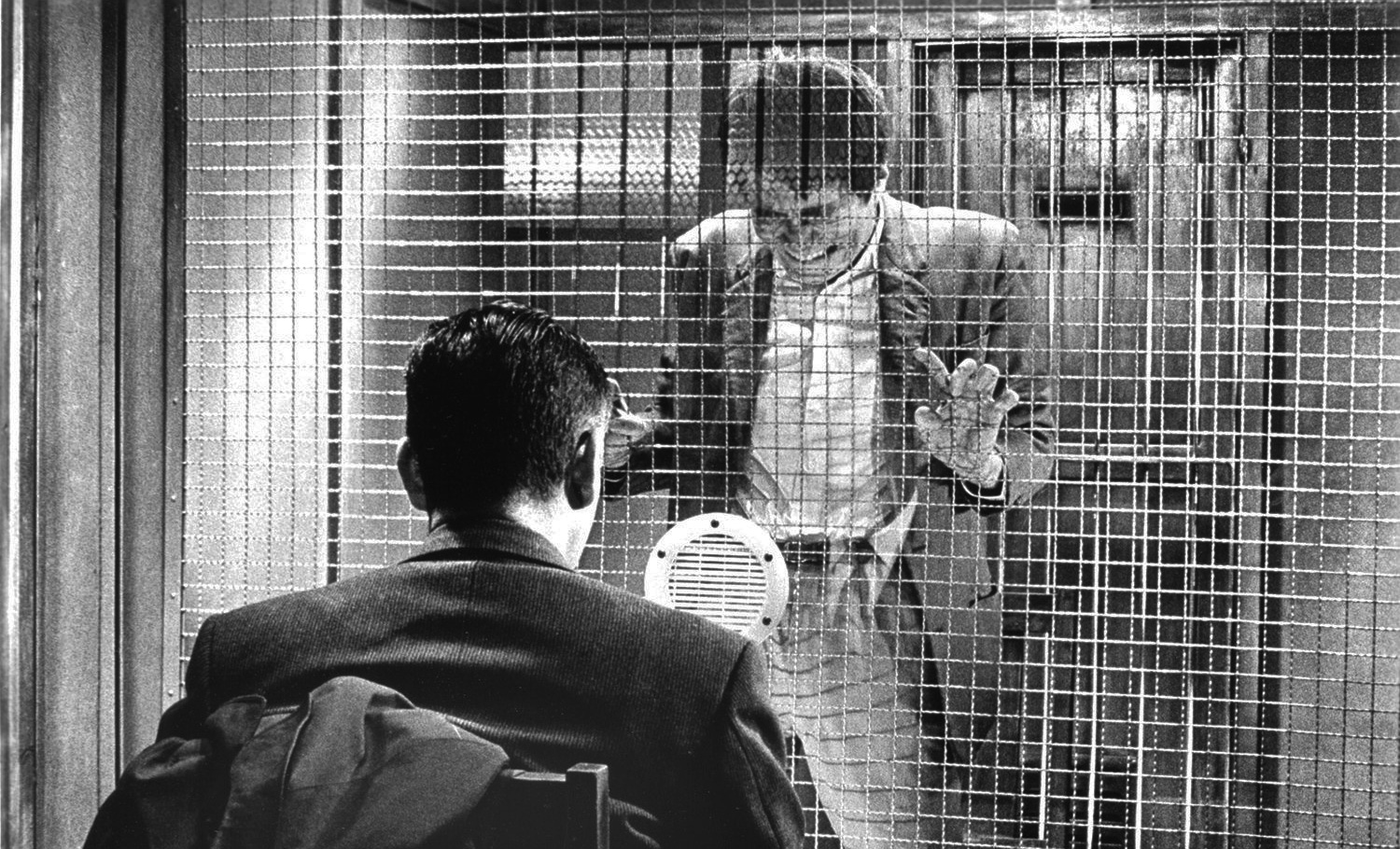
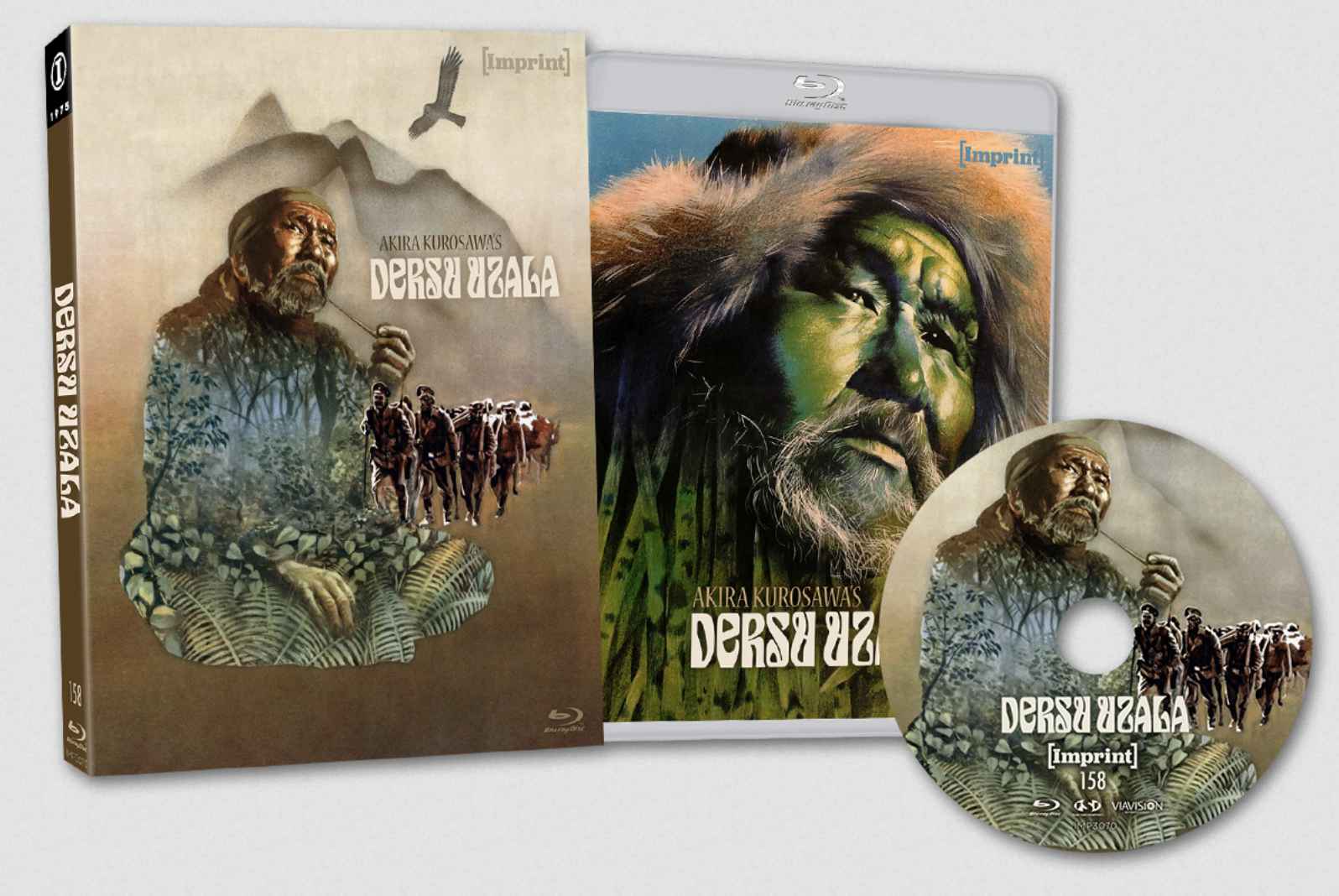
I’ve been listening to Donald Richie’s commentary on the Criterion edition of Drunken Angel and found his comments on the nightclub scene and the Jungle Boogie song amusing – I have to be honest that I also find the scene rather embarrassing and the singer rather horrid, though perhaps that is the point that Kurosawa wants us to take from the scene. On my first viewing of Drunken Angel, I thought the music appropriate because it seems to comment on the kind of jungle-like, dog-eat-dog world of the sump.
However, after watching the Sorensen documentary, I wonder whether Kurosawa might be using the song to stand for all that is cheap and worthless about the occupation’s culture (and of course its influence on Japanese popular culture). Richie mentions in his commentary that Kurosawa had his “top 10” of classical pieces, which resulted in the Bolero-style music of Rashomon, the Debussy style music here, and doubtless other examples (my knowledge of classical music is too scant to take Richie’s point further). So, one could not say that Kurosawa was opposed to western culture, because he obviously was fond of so much of it (highbrow and lowbrow). But what about the sort of popular jazz represented here? It seems wanton and promiscuous, so apt for the modern yakuza world. In a film structured so much on opposites, is this intended to be set against the beauty of the finale’s redemption music, and to stand for everything that is seductive and deadly about western culture, a culture without decorum or restraint?
Of course there is much more music in the film, and much more to say on the subject. The guitar music seems particularly fine to me, but I wonder to what extent its presence may also be considered to be Kurosawa criticizing the occupation’s culture. Personally I find the dirge-like tune Okada picks out one of the most beautiful in the film, but is it again another symbol of foreign influence? I think it is Sorensen who mentions that Kurosawa had originally wanted to use Mack the Knife. And the guitar: perhaps Kurosawa associates the figure of a serenading guitar player with American culture? Were guitars and troubadours part of Japanese culture already? This, and the slick-back hair of Mifune, reminds me of the world of the greaser, which by 1948 was just about to emerge as a subculture.
Anyone actually like the Jungle Boogie sequence, and any thoughts on whether Kurosawa is being critical of western popular music?